The Laffer Curve is Propaganda
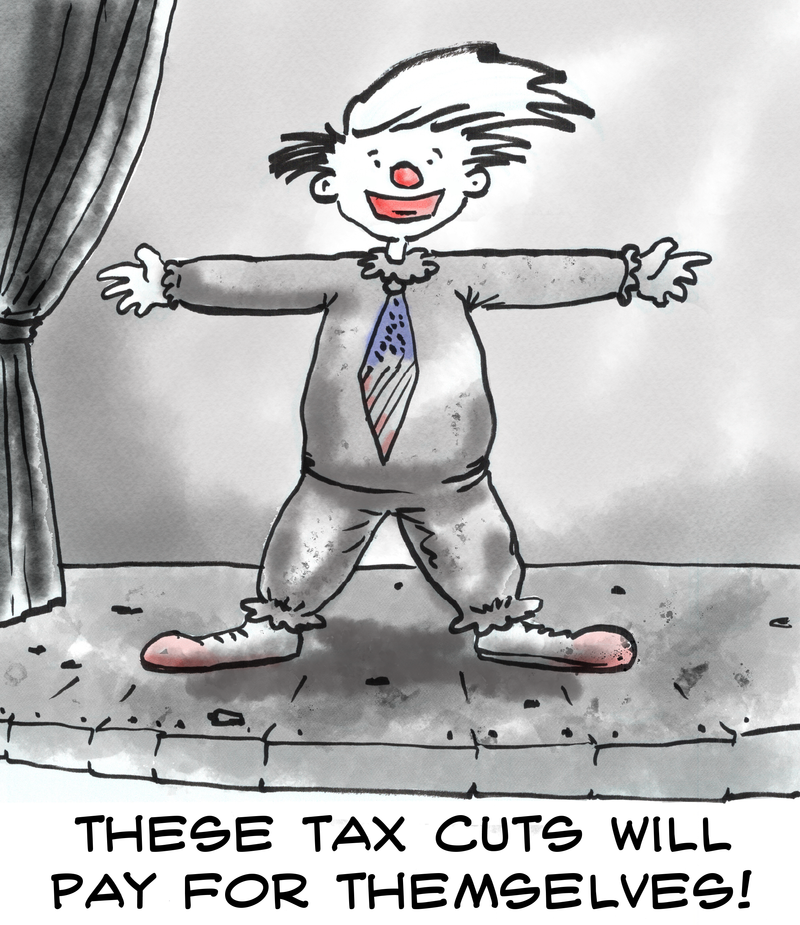
The Laffer curve is the oft-repeated public justification for Republican tax cuts. The story is often told that Art Laffer drew it on a napkin while meeting with Dick Cheney and Donald Rumsfeld, and it changed the conservative movement forever.
But the Laffer Curve is not the real reason for Republican tax cuts. The real reason is wealthy donors to Republican campaigns want tax cuts. Wealthy donors get what they want (and maybe we should do something about that). But the Laffer curve is how those tax cuts get sold to the American people, so it’s worth understanding. It has been derided as voodoo economics by such well known socialists as George Bush the Elder, but it persists.
The Basic Idea
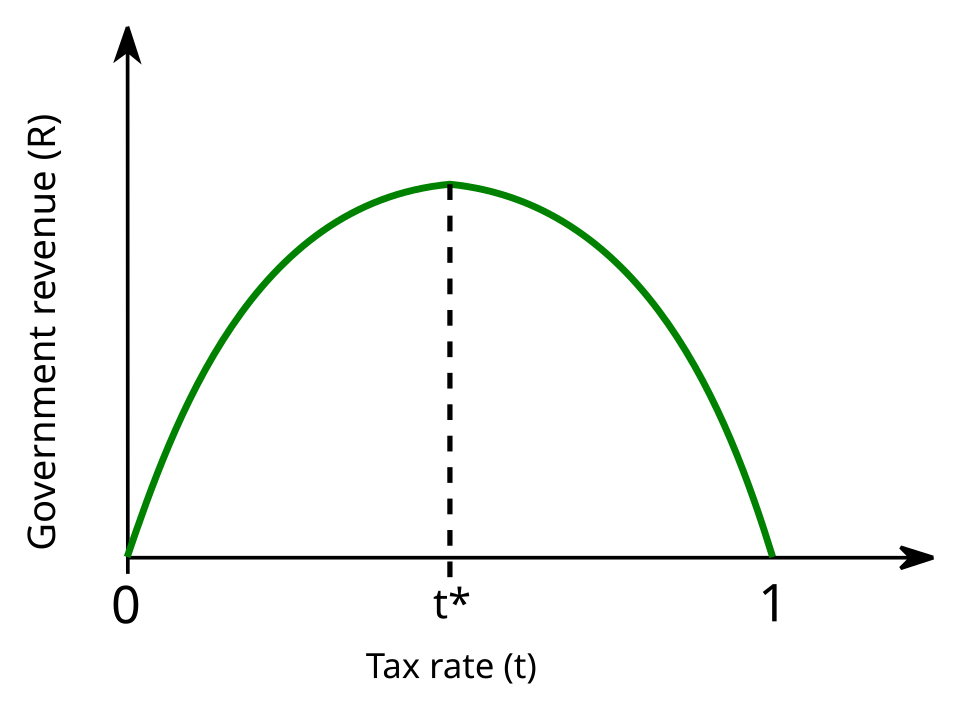
The basic idea is this: tax revenue at 0% tax rate is $0 (obviously). At 100% tax rate, tax revenue also approaches $0 (because once you put all your taxpayers in jail for failing to pay taxes… you don’t get any more taxes).
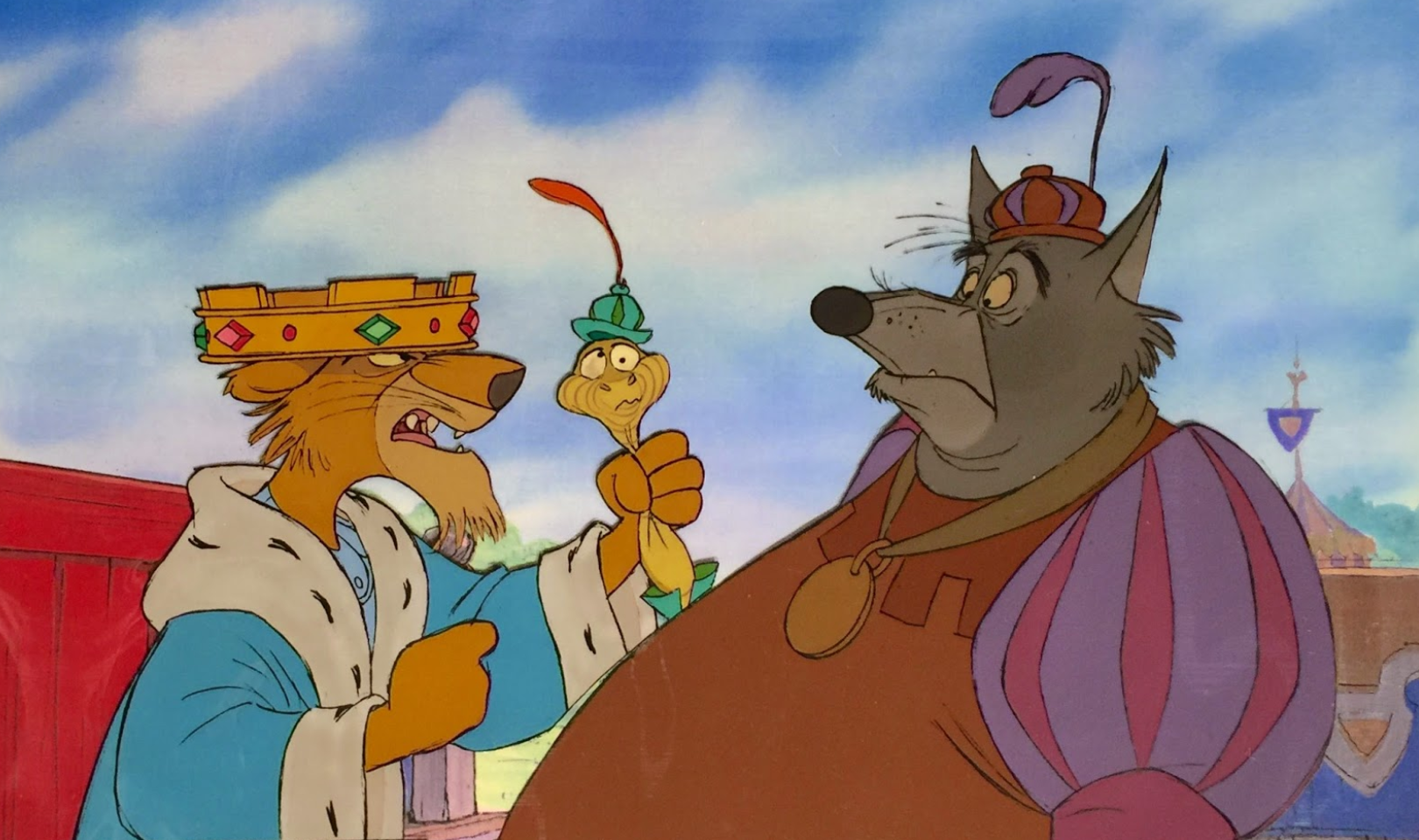 “Squeeze every last drop”
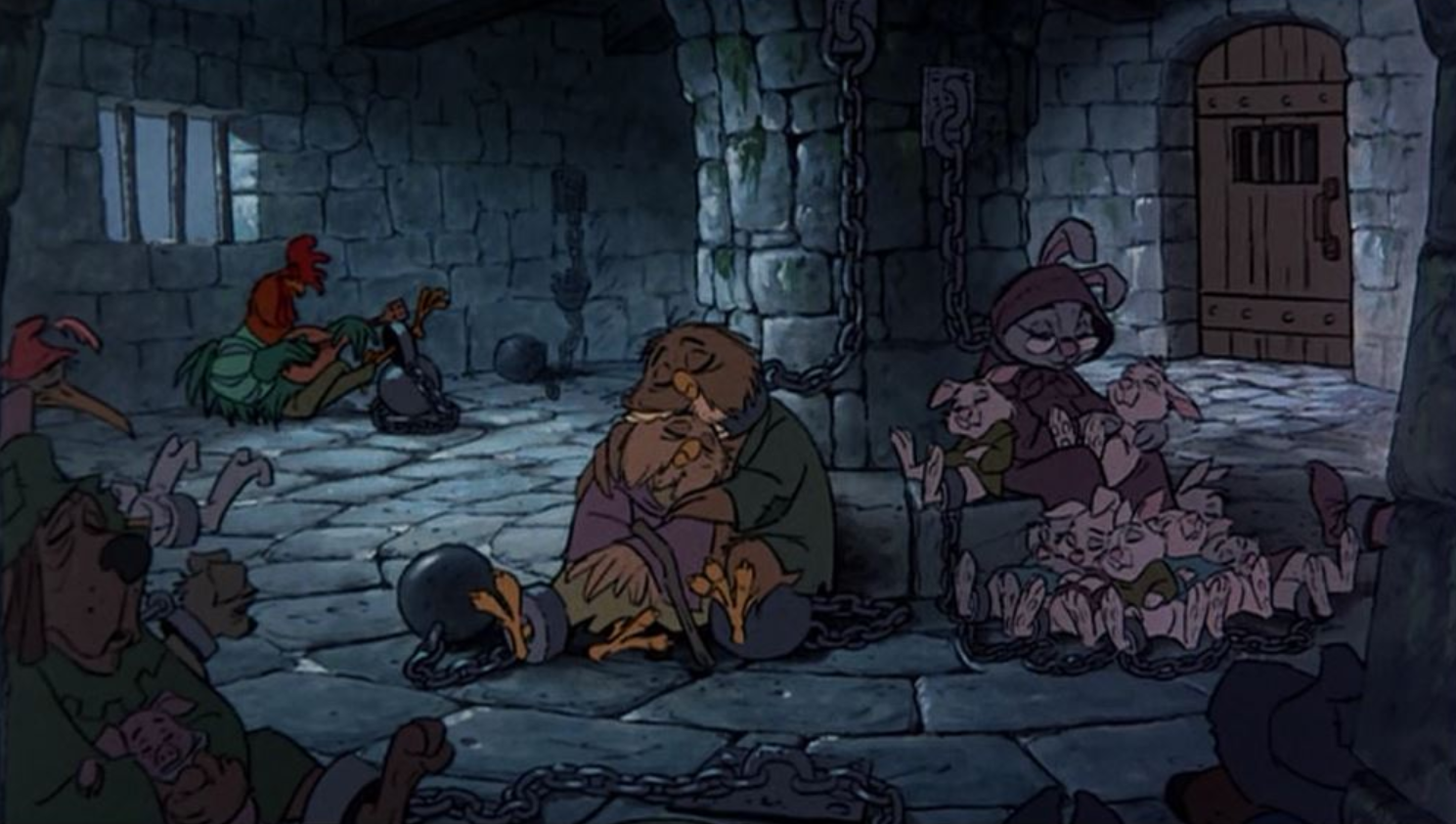 “Poor economic growth”
Somewhere in the middle is an optimum. A napkin sketch of the curve might look like this:
https://en.wikipedia.org/wiki/Laffer_curve
Any tax cut that gets us closer to that optimum could, theoretically, “pay for itself.” Put another way: If we cut tax rates, people might feel more incentive, and therefore might work more, and therefore might do more economic activity, and therefore tax revenues might go up. And that might work if the starting tax rates are on the right side of the curve.
But how do we know which side we are on?
If we were doing propaganda for Republicans, it would be our job to argue that we are always on the right side of that curve, no matter what the evidence says.
There is a lot of compelling evidence to the contrary. The last several rounds of tax cuts have decreased revenue. That suggests that we are on the left side.
Also consider this: if people are barely making enough money to live, and you increase taxes, they will be inspired to work harder because of their desire to keep living. That premise leads to a curve that slopes gently upward to the right, and crashes hard on the far right.
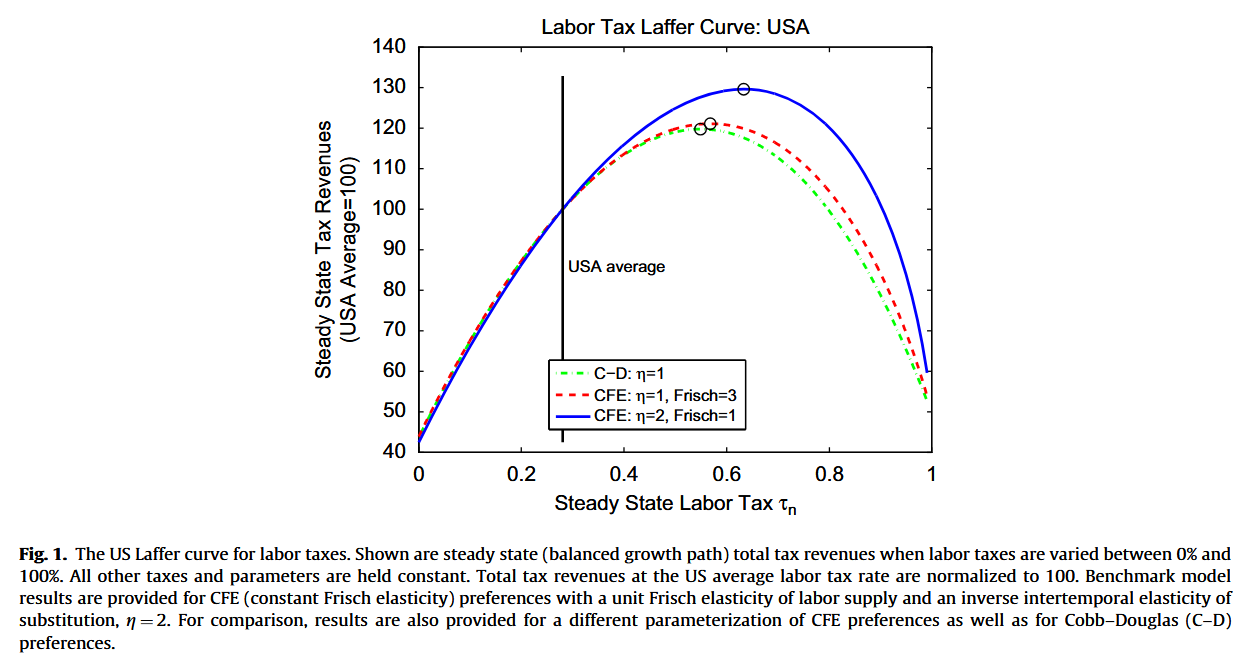 From: Trabandt, Mathias, and Harald Uhlig. “The Laffer Curve Revisited.” Journal of Monetary Economics 58, no. 4 (2011): 305–27. https://doi.org/10.1016/j.jmoneco.2011.07.003.
Trabandt and colleagues thought a lot about effort, productivity, tax revenue, and tax rates. They expressed that with a mathematical model. The result was this gentle slope up to the right, followed by a crash at the far right. Just like we would suppose from the “people want to live” premise.
I can’t say for sure that this is exactly right (that would require experiments that we can’t run). But the big picture conclusion is the same as the actual evidence of the last 40 years: we’re on the left side of the curve, to the left of the peak. Tax cuts won’t pay for themselves.
Despite the clear theory and evidence, it keeps getting repeated
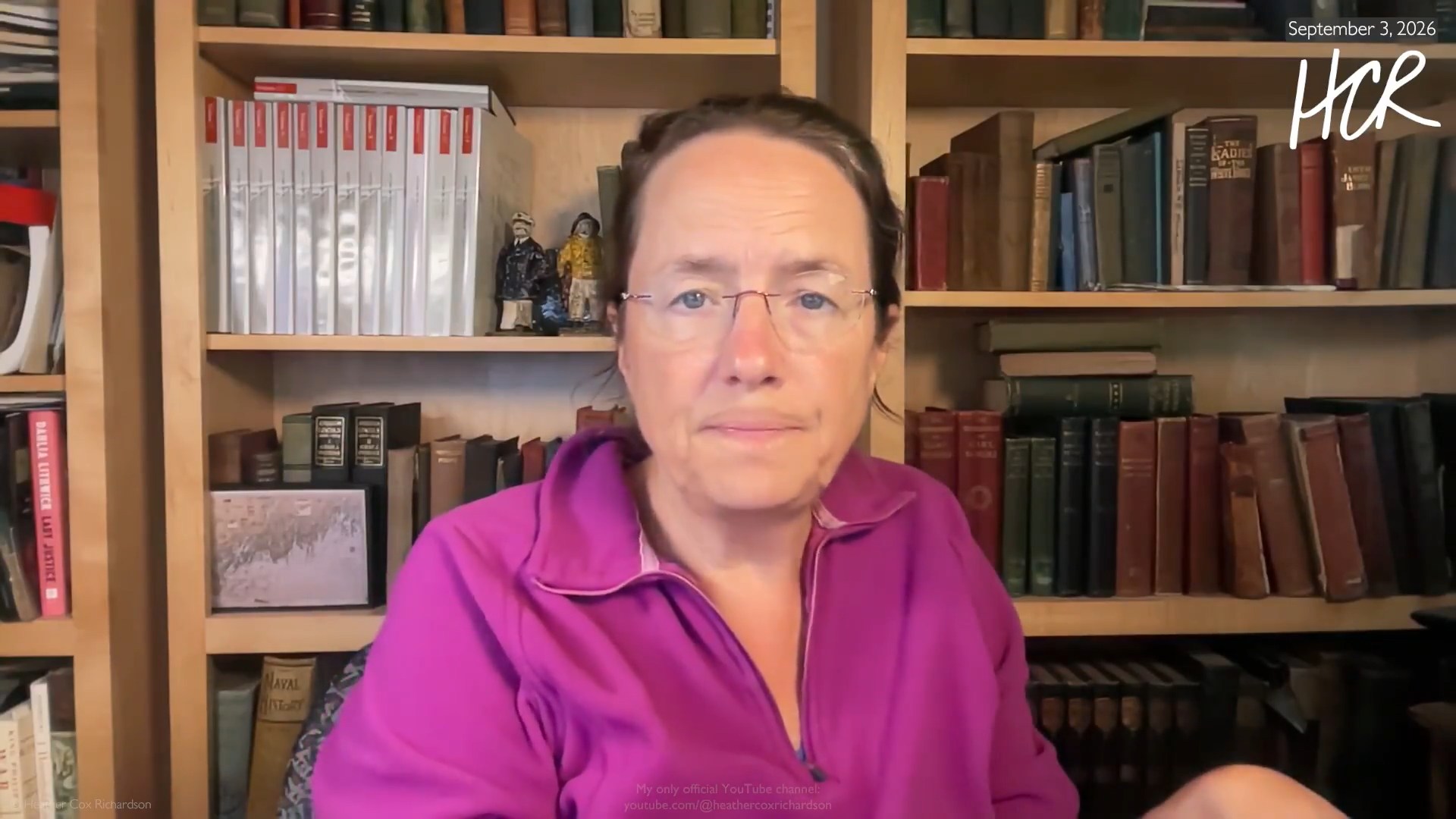 https://www.youtube.com/watch?v=JVSqEa0-oMU
What the argument was (to the degree that it was fleshed out) was that if you got rid of taxes and if you got rid of regulations, that would enable people with money to invest it really efficiently
This is Dr. Heather Cox Richardson, political historian. I won’t play her video, please go watch it if you want a better understanding of this issue. She explains how the argument was made in the late 1970s
What [Republicans] argued is that the economic growth would be so extraordinary that even lower taxes would would produce as much revenue and put it into the treasury so that we could have everything.
They wanted everyone to believe we were on the right side of the Laffer curve.
As soon as Reagan is elected and his director office of management and budget gets in and starts trying to figure out how much extra money they’re going to make from cutting all these taxes, the government computers say, “You’re in real trouble because you’re not going to have any revenue here and you’re going to throw everything into the red.” So, you know what they did? They reprogrammed the computers. They didn’t say, “Oh, oopsy poopsy, we were wrong.” They said, “Well, we know we’re right. So now we’re just going to reprogram the computers to show that we’re right.”
They were wrong, cut-tax-to-raise-revenue strategy has failed over and over.
But this invites the question: is maximizing government revenue even a good goal to have?
It seems that propagandists take it as a given. They assemble some points and draw a curve that fits the “tax cuts pay for themselves narrative.”
http://www.goodmath.org/blog/2007/07/14/a-laughable-laffer-curve-from-the-wsj/
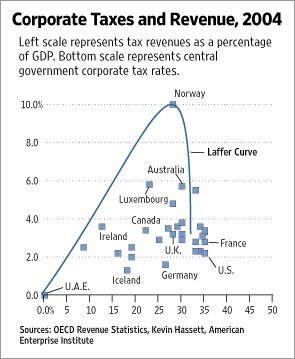
There’s a lot of work being done by that single point from Norway. It seems to me that the data looks like an upward line with a lot of noise, not an optimum at 25%. But if there were an optimum at 25%, we would reasonably want to cut taxes to that rate! And that is the whole point of drawing that fanciful blue line: to justify the pre-approved tax-cut conclusion based on a scribbled-on curve and the unexamined premise that maximizing revenue is inherently good.
Why does this bad idea keep getting repeated?
Let’s come back to the idea of wealthy donors getting what they want. A 2014 Princeton study examined who got what they wanted from the government. They looked at what policies were popular with the broad public, and what policies were popular with rich people. Guess which policies were most likely to get implemented.
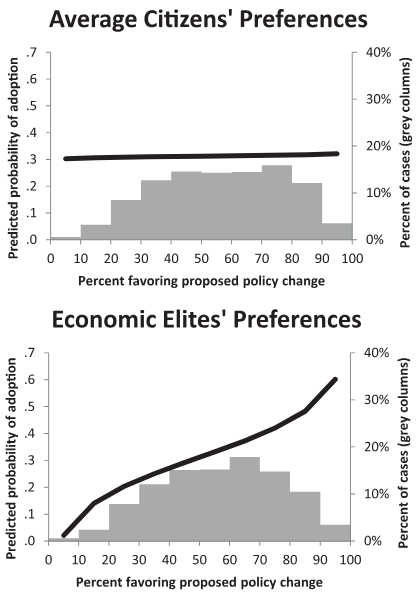
Gilens et al. “Testing Theories of American Politics: Elites, Interest Groups, and Average Citizens.” Perspectives on Politics 12, no. 3 (2014): 564–81. https://doi.org/10.1017/S1537592714001595.
The popularity of a policy among the general public had essentially no impact on its probability of adoption. The preferences of the economic elites, however, had a very strong impact. Why is this? Put simply, the person who can fire me is the person I really work for. And rich donors can fire politicians by moving their donations to a different politician.
What does that mean? It means we need wealth taxes and campaign finance reform. Until we get that, there is no accountability to democracy, facts, or reason. No amount of evidence will convince a politician to vote against the person who is holding his golden leash. Talking about ideal tax rates or optimal policies or maximizing revenue is a distraction from the immediate progress we need to make.
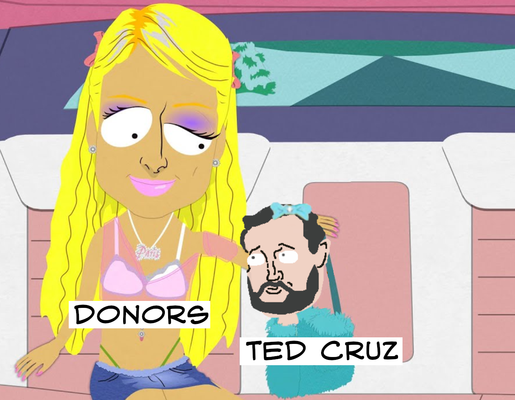
And politicians should want wealth taxes, estate taxes, and campaign finance reform! It means that they are liberated from their subservience to those wealthy donors. I don’t think it can possibly feel good to be owned. Ask Paris Hilton’s purse chihuahua.
For anyone but Ted Cruz, I’ll bet that sounds like a bad time.
One job of the government is to represent our collective will, to accomplish the goals we cannot accomplish as individuals. We may be constrained by our economic realities. But the ideal outcome has nothing to do with maximal government revenue! The ideal outcome is policies reflecting the needs of the people, and revenue sufficient to meet those policy goals.
PS:
If you want an ad-free and tracker-free version of this post to read or share, you can find me at a2facts.com. The a2facts.com project is dedicated to accountability in government and policy. This essay ©2026 by John Brown is licensed under Creative Commons Attribution 4.0 International. Please share, remix, and reprint and cite as: “The Laffer Curve is Propaganda” by John Brown is licensed under CC BY 4.0